Showing posts with label NY. Show all posts

Wednesday, August 26, 2015

5 Fun Things to Do With Your Pet This Summer

Fall is just around the corner, and you want to enjoy what’s left of the warm weather with your pet with more than just the usual walk around the block. If this sounds like you, consider these five activity ideas for summer fun with your four-legged friend that can boost your pet’s enjoyment level a few notches and strengthen the pet/owner bond. And although we hope it doesn’t happen, should an emergency occur, remember that Veterinary Emergency Group in White Plains, NY is available 24 hours a day, 7 days a week.

1.      Dog Parks: Even if your dog has been to a dog park before, no two days at a dog park are exactly the same. There are always new dogs and people to meet and different squirrels and birds to chase. And perhaps the best part for your dog is that at many dog parks, dogs can roam free to play catch or hide-and-seek. Just be sure to keep an eye on your dog at all times, especially around dogs that are much larger or smaller than yours.

2.      Road Trip: This doesn’t necessarily have to be an extended road trip across state lines. It could be just a quick drive while you run your errands, visit your friends, or pick up some food at your pet-friendly pet store. Many pets love riding in cars and being able to spend time with you, instead of waiting at home for your return. Just make sure your pet is comfortable with car rides first before bringing them along. You know your pet better than anyone, so look for the visual cues they give you, and make your decision accordingly.

3.      Backpacking/Hiking: Pet sometimes need a change of scenery, so if you’ve been taking yours to the same places over and over again, try a hike through a trail in the woods for your next excursion. Your pet will love this outdoor adventure and get some exercise at the same time! Remember to fill your backpack with plenty of food, water, bowls, and a first aid kit, and make sure your pet is updated with their preventatives and vaccinations. Carry a first-aid kit for you and your pet as well, and know how to administer basic first aid if your pet becomes injured, and remember, you can call us at any time for emergencies at (914) 949-8779.

4.      Camping: If your dog enjoys the hiking and backpacking, why not turn it into a full camping trip?! During your planning, research the camp area to ensure that it’s pet friendly and to determine the best trails to hike on. Remember to bring an extra sleeping bag and/or blanket as well for your pet to sleep on. For their safety, it’s best to have them sleep in the tent with you, and make sure to keep an eye on them near the grill or fire pit.

5.      Kayaking: Kayaking might be an activity you’ve ever thought of doing with your dog before, but it can actually be very enjoyable for both of you, not to mention a great work out for YOU. If your dog enjoys the water, plan a kayaking trip with them! Just be sure to have a life vest for your dog, in case he jumps or falls out of the kayak.

We want you and your pet to have fun and bond this summer, so we hope these tips will help you do just that. And remember if an emergency should occur while you’re out enjoying these activities, please give us a call at any time at (914) 949-8779. We’re available 24 hours a day, 7 days a week to assist you and your pet.


Friday, July 24, 2015

Top 3 Pet Travel Items


So you’re planning a week-long trip with your pet to sunny Florida this summer, or perhaps you’ll be driving a few hours away for a weekend camping trip. Wherever you’re going and however you’ll get there, Veterinary Emergency Group in White Plains, NY wants your dog or cat to be prepared for the trip.

In addition to food and water, there are many items that should accompany your pet when you travel, for their safety. Far too often, there are pet accidents and injuries that occur that could have been avoided with adequate preparation. We want to prevent these incidents from happening to your beloved companion, so we have selected what we consider the top three items you need to travel with your pet.

1.  Emergency Supplies/First Aid Kit

Pets are curious by nature and can find themselves in potentially dangerous situations when they’re in a new environment. Hiking in the woods, playing in a dog park—you name it. As a rule of thumb, always bring a pet first aid kit when you travel with your pet. In addition to basic first aid supplies (gauze, scissors, hydrogen peroxide, etc.), your kit should include our phone number (914-949-8779) for local trips and the number of the nearest emergency pet hospital to your destination for long distance trips. Remember, Veterinary Emergency Group is available 24 hours a day, 7 days a week, should an emergency occur.

2. Car Safety Harness/Carrier

A car safety pet harness is especially important for long road trips or trips on bumpy roads. Most pet safety harnesses are designed with a seat belt loop so they can be secured by a locked seat belt. A safety harness can keep your pet safe and seated while preventing any distractions caused by their roaming around the car. There are many sizes and styles available to accommodate most pet breeds. For air travel, all airlines that allow pets require pet carriers. Just be sure to check with your airline first for their pet policy, including the carrier dimension requirements.

3.  Pet Supplies


This may seem like an obvious item, but you’d be surprised at how many pet owners forget to bring their pet’s leash or collar during trips. Keep in mind that many places, such as parks and beaches, require that pets be on a leash at all times. Plus, many pets can be act unpredictably in a new environment and will likely want to explore, so keeping them on a leash will help keep them from chasing squirrels and rabbits, following the scent of another pet, etc. Make sure that your pet has identification as well, whether it’s in the form of an ID tag, a microchip, or both. Having a recent photo handy is also a great idea.

Wednesday, May 13, 2015

Springtime Pet Safety Tips


Spring has sprung, and with the change of season, our thoughts inevitably turn to Easter celebrations, spring cleaning and much-needed home improvement projects. But the new balmy weather can prove not-so-sunny for curious pets—or their unwitting parents. Before you embark on seasonal chores or outdoor revelry, take inventory of potential springtime hazards for your delicate, furry friend. To help you out, our ASPCA experts have come up with a few seasonal tips that will help prevent mishaps or misfortunes. 

Screen Yourself Many pet parents welcome the breezy days of spring by opening their windows. Unfortunately, they also unknowingly put their pets at risk—especially cats, who are apt to jump or fall through unscreened windows. Be sure to install snug and sturdy screens in all of your windows. If you have adjustable screens, make sure they are tightly wedged into window frames.

Buckle Up! While every pet parent knows dogs love to feel the wind on their furry faces, allowing them to ride in the bed of pick-up trucks or stick their heads out of moving-car windows is dangerous. Flying debris and insects can cause inner ear or eye injuries and lung infections, and abrupt stops or turns can cause major injury, or worse! Pets in cars should always be secured in a crate or wearing a seatbelt harness designed especially for them. 

Spring Cleaning Spring cleaning is a time-honored tradition in many households, but be sure to keep all cleaners and chemicals out of your pets’ way! Almost all commercially sold cleaning products contain chemicals that are harmful to pets. The key to using them safely is to read and follow label directions for proper use and storage.

 Home Improvement 101 Products such as paints, mineral spirits and solvents can be toxic to your pets and cause severe irritation or chemical burns. Carefully read all labels to see if the product is safe to use around your furry friends. Also, be cautious of physical hazards, including nails, staples, insulation, blades and power tools. It may be wise to confine your dog or cat to a designated pet-friendly room during home improvement projects. 

Let Your Garden Grow—With Care Pet parents, take care—fertilizers, insecticides and herbicides keep our plants and lawns healthy and green, but their ingredients aren't meant for four-legged consumption and can be fatal if your pet ingests them. Always store these poisonous products in out-of-the-way places and follow label instructions carefully. Check out our full list of garden care tips. 

Poisonous Plants Time to let your garden grow! But beware, many popular springtime plants—including Easter lilies, rhododendron and azaleas—are highly toxic to pets and can easily prove fatal if eaten. Check out our full list—and pics!—of toxic and non-toxic plants for your home and garden.

Ah-Ah-Achoo! Like their sneezy human counterparts, pets can be allergic to foods, dust, plants and pollens. Allergic reactions in dogs and cats can cause minor sniffling and sneezing as well as life-threatening anaphylactic shock. If you suspect your pet has a springtime allergy, please visit your veterinarian as soon as possible. · 

Pesky Little Critters April showers bring May flowers—and an onslaught of bugs! Make sure your pet is on year-round heartworm preventive medication, as well as a flea and tick control program. Ask your doctor to recommend a plan designed specifically for your pet. · Out and About Warmer weather means more trips to the park, longer walks and more chances for your pet to wander off! Make sure your dog or cat has a microchip for identification and wears a tag imprinted with your home address, cell phone and any other relevant contact information. Canines should wear flat (never choke!) collars, please. 

 Source: https://www.aspca.org/pet-care/springtime-safety-tips


Wednesday, March 25, 2015

Reasons To Act More Like Your Pet

Pets aren’t always easy to take care of, and they often require a substantial time commitment (something you’re all too aware of at, say, 3 a.m., when Bing Clawsby is finally ready to go outside and do his business). But pets provide an amazing return on that time investment, especially when it comes to your health. Case in point: According to the U.S. Centers for Disease Control and Prevention, pet owners tend to have lower blood pressure, cholesterol, and triglyceride levels than non-pet owners. But that’s not all. Pets also model many surprisingly healthy behaviors that humans would do well to emulate. Here are just a few, according to veterinarians, dog trainers, and other pet experts. 


1. They focus on what matters most. You may get grumpy after a bad day at the office, but your pooch never does. “Companion animals mostly care about food, love, and shelter (not always in that order). As long as they have those things, they don’t need much else,” Mary Gardner, DVM, a veterinarian and cofounder of Lap of Love Veterinary Hospice tells Yahoo Health. “Pets also don’t complain much at all. People believe they hide their pain; I simply think they manage it differently.” If humans could model these behaviors, Gardner adds, we’d be healthier, happier, “and more people would want to be around us.” 

2. They practice portion control (even if not by choice). Snowball might not want to limit her kibble intake any more than you want to limit your tortilla-chip intake. Nonetheless, she typically eats reasonably sized helpings of nutritionally balanced food — and never gets to eat straight out of the bag. Follow her lead. “Both animals and people need structure and regulation when it comes to portion size,” says Jme Thomas, executive director of Motley Zoo Animal Rescue based in Redmond, Washington. 

3. They know how to de-stress. Your pooch doesn’t pour a glass of cabernet when the going gets rough (though, yes, it would make a very popular YouTube video if she did). She may, however, start begging for a walk or to play a game. Smart dog! “Actively seeking healthy activities — that function as de-stressors when stress levels are high — helps to reset people as well as dogs, and bring us back to a productive and functional status, from which many things feel a lot more ‘do-able,’” Marisa Scully, a certified dog behavior specialist in Philadelphia, tells Yahoo Health. 


4. They hit the hay. People don’t get enough sleep: According to a 2014 survey by the National Sleep Foundation, 45 percent of Americans said that a lack of sleep had impaired their activities at least once in the previous week. Learn from your cat or dog, who knows just how important it is to get enough shut-eye, says Jeff Werber, VVM, president and chief veterinarian of Century Veterinary Group in Los Angeles. “Whether it’s a lazy dog day afternoon, or a quick cat nap, you won’t find them burning the candles at both ends.” 

5. They stretch! There’s a reason one of the most common yoga moves is named downward dog. Dogs (and cats) stretch constantly — and we should do the same, notes certified dog behavior consultant Russell Hartstein. Why? Stretching can improve flexibility and reduce your risk of injury. 

6. They’re open to new things. Animals are naturally curious. “Open a box or empty a bag and before you know it, your cat will have climbed in to investigate. Walk your dog past a gardener planting flowers and chances are she will check it out before moving on,” Werber says. “And they’re always up for some fun. A game of catch, a walk, a visit — bring it on.” Since research has found that seeking out new experiences can keep people feeling young and healthy, we’d do well to follow suit.

7. They’re comfortable getting zen. Numerous studies have found a correlation between mindful meditation and reduced stress, decreased heart disease, and a stronger immune response — and that’s something your cat already knows how to do instinctively. “Each morning I sit on the sofa with my cat, Turtle, while I drink my first cup of coffee,” says Kristen Levine, a pet living expert. “We spend about 10 minutes together, her getting neck and head rubs, me enjoying her purring and having a few meditative moments at the start of the day.It sounds simple, and it can be, but depending on the activity, it can have a powerfully relaxing or invigorating effect for both human and critter.” 


Friday, November 21, 2014

Top Ten Winter Skin & Paw Care Tips


Exposure to winter’s dry, cold air and chilly rain, sleet and snow can cause chapped paws and itchy, flaking skin, but these aren’t the only discomforts pets can suffer. Winter walks can become downright dangerous if chemicals from ice-melting agents are licked off of bare paws.

Says Dr. Louise Murray, Vice President of the ASPCA Animal Hospital, “During the winter, products used as de-icers on sidewalks and other areas can lead to trouble for our animal companions, potentially causing problems ranging from sore feet to internal toxicity. Pet parents should take precautions to minimize their furry friends' exposure to such agents.” To help prevent cold weather dangers from affecting your pet’s paws and skin, please heed the following advice from our experts: 

· Repeatedly coming out of the cold into the dry heat can cause itchy, flaking skin. Keep your home humidified and towel dry your pet as soon as he comes inside, paying special attention to his feet and in between the toes. · Trim long-haired dogs to minimize the clinging of ice balls, salt crystals and de-icing chemicals that can dry on the skin. (Don’t neglect the hair between the toes!) 

· Bring a towel on long walks to clean off stinging, irritated paws. After each walk, wash and dry your pet’s feet to remove ice, salt and chemicals—and check for cracks in paw pads or redness between the toes. 

· Bathe your pets as little as possible during cold spells. Washing too often can remove essential oils and increase the chance of developing dry, flaky skin. If your pooch must be bathed, ask your vet to recommend a moisturizing shampoo and/or rinse. 

 · Dressing your pet in a sweater or coat will help to retain body heat and prevent skin from getting dry. · Booties help minimize contact with painful salt crystals, poisonous anti-freeze and chemical ice-melting agents. They can also help prevent sand and salt from getting lodged in between bare toes, causing irritation. Use pet-friendly ice melts whenever possible. · Massaging petroleum jelly into paw pads before going outside helps to protect from salt and chemical agents. And moisturizing after a good toweling off helps to heal chapped paws. 

· Brushing your pet regularly not only gets rid of dead hair, but also stimulates blood circulation, improving the skin’s overall condition. 

· Pets burn extra energy by trying to stay warm in wintertime, sometimes causing dehydration. Feeding your pet a little bit more during the cold weather and making sure she has plenty of water to drink will help to keep her well-hydrated, and her skin less dry. 

· Remember, if the weather’s too cold for you, it’s probably too cold for your pet. Animal companions should remain indoors as much as possible during the winter months and never be left alone in vehicles when the mercury drops. 

 SOURCE: https://www.aspca.org/pet-care/top-ten-winter-skin-paw-care-tips


Tuesday, September 16, 2014

Why Dogs Bark and Growl

Does your dog growl or bark when a stranger approaches your house or when something goes bump in the night? If so, you’re not alone.


Most dogs will vocalize when they are exposed to new or different situations, including strange people or animals entering their territory; being separated from their pack, mother or even your family members; or new or alarming sounds. Dogs may also bark or growl when they see prey, such as squirrels, and they may bark for attention, food or if they are anxious. Dogs often growl when they are fearful or trying to assert themselves in a situation. If the dog’s fear or assertiveness is alleviated by growling or barking, the dog will learn that his behavior is acceptable and the behavior may become more frequent or severe. Some medical problems may cause growling or barking and older pets experiencing senile changes may have barking problems. Intense and continuous barking may be considered compulsive. Check with your veterinarian to evaluate your pet’s barking or growling problem. Behavior training and drug therapy may be helpful in reducing barking for pets with medical, geriatric and compulsive disorders.
Socializing your puppy can help
Acclimate your puppy to a variety of different people, environments, situations and noises to help lessen anxiety as your puppy grows. Make sure your puppy spends time alone so that he doesn’t develop separation anxiety while you are away from him. Proper training is essential to preventing behavior problems, such as growling and barking. Ask you veterinarian for more information about puppy training. 
Correcting a barking or growling problem
Correcting a barking or growling problem first requires that you have effective management of your dog. Once you have achieved this, you can begin to train your dog to lessen his barking or growling behavior by using rewards for quiet behavior. The reward should be something that the dog really likes such as a favorite treat, tummy rubs, or a favorite toy. Punishment is generally ineffective in correcting barking problems. Too much punishment may even exacerbate the behavior and cause the dog to be fearful or aggressive.
Begin your training with situations that you can easily control (such as a family member making a noise that causes the dog to bark) before moving on to difficult situations (such as a strange animal in your yard). When your dog barks at the stimuli (for instance, a doorbell ring), immediately interrupt the barking. When the dog is quiet offer the dog a reward for their behavior. Without the reward there is no incentive to remain quiet.Reward your dog when, at your request, he has stopped barking. Only reward the dog when he is quiet and gradually increase the amount of time that the dog needs to be quiet for him to receive a reward.
As the barking or growling problem decreases, make sure to direct your dog to more appropriate behavior, such as play, and the problem should lessen over time. Don't forget to discuss training options with your veterinarian to find the one that will work best for your pet.


Thursday, February 20, 2014

Today is Love Your Pet Day

The month of February, seems to be all about love, and our pets are no exceptions. Today is Love Your Pet Day!  Give a special treat to your pet or just some extra cuddle time today.  We also share in your love for your pets!

Tuesday, December 17, 2013

Christmas Pet Safety


“My pet would never eat food off the table!”
“My pet would never knock over the Christmas tree!”
“My pet would never bite someone!”

We all know our pets pretty well, but what we don’t always realize is that stress can make anybody do crazy things! When you have holiday guests or flashing Christmas lights or loud holiday music—or all of the above—at your house all at once, your pet may get stressed and frustrated, causing them to act out in unexpected ways. Most pet accidents are met with the statement, “He’s never done anything like that before!”


We recommend always making sure that your pet has a safe place to sit and relax during your holidays parties. Just like some people, pets need to get away from the action and de-stress, but most of the time they don’t know how to ask for their space. If your pet is comfortable in their crate, we recommend moving it into a quiet room and letting them spend some time resting during your holiday get-togethers. Your pet will be happier, and by extension, you and your guests will be happier! And holiday disasters will be prevented.  

Tuesday, November 5, 2013

Pets & Garbage

If your pet’s nose goes in the trash on a regular basis, be extra careful during the holidays! The trash will be extra interesting when filled with holiday scraps, but it will also be more dangerous. Keep those garbage can lids on tight!

Tuesday, September 17, 2013

What is a hotspot?


Question

My dog was recently diagnosed with a "hotspot." Can you tell me more about this skin condition?

Answer

“Hotspot” is a general term used to describe the angry reaction that your pet’s skin is displaying. It may also be referred to as “acute moist dermatitis.”
Hotspots have many causes, but are usually the result of self trauma and subsequent infection that occurs as your pet tries to relieve himself from a pain or itch. An underlying allergy is most often the cause of the pain or itch. Some breeds are more prone to seasonal allergies, so you may see hotspots at the same time each year.
There are three types of allergies that may lead to hotspots:
  • Inhaled allergy (pollens, dust, molds)
  • Insect allergy (fleas, bee sting, spider bite)
  • Ingested allergy (food)
Please discuss treatment options, which may include thorough cleaning, antibiotics and anti-inflammatory agents, with your veterinarian.
For more information, see Library Articles Skin Problems in Pets, Allergies and Spring Allergies.


Originally published on Healthy Pet.

Tuesday, August 13, 2013

One Thing you should Never see on Pet Food Label


If you see the words "veterinarian approved" on your pet food label, look out. That claim is always untrue.
Veterinarians do not approve labels or products. Only state regulatory agencies can do that, according to the The Business of Pet Food, a new website launched by the Association of American Feed Control Officials (AAFCO).
That’s just a taste of the information you’ll find on the site: www.petfood.aafco.org.
What else?
Ingredient lists, labeling requirements, analyses of commercial pet food and government regulations for making and labeling pet food.
The site is for people who sell pet food -- or want to. But there’s lots of information for pet owners, too.
"Many people are surprised by how many regulations apply to the pet food industry," says Liz Higgins, Chair of AAFCO‘s Pet Food Committee.
For example, did you know "veterinarian recommended" means that the company making the food actually surveyed veterinarians to find out if they would recommend the food?
And, like we said, "veterinarian approved" is never true.
So, if you’ve ever wondered …
What’s really in my pet’s food?
What would it take to turn my secret recipe for Tasty Treats into a mail-order business?
Go to http://www.petfood.aafco.org.


Originally published by Healthy Pet.

Wednesday, August 7, 2013

Don't Ignore Breathing Difficulties in Shortnosed Dogs

Unfortunately, the only thing normal about noisy breathing for dogs with "pushed-in" faces is that it is an expected response to a shortened upper jaw, which creates excess soft tissue in the back of the throat.

Some dogs are affected to the point where they experience brachycephalic (the scientific term for breeds with pushed in faces) obstructive airway syndrome or BOAS. If left untreated, problems can get worse to the point where an animal can collapse due to a lack of oxygen.
Owners of affected dogs may be putting them at risk if they do not recognize the problem and seek treatment, according to researchers Rowena Packer, Dr. Anke Hendricks and Dr. Charlotte Burn of the United Kingdom's Royal Veterinary College.
In their 2012 study, the researchers discovered that owners of such dogs as pugs, English bulldogs, Pekingese, French bulldogs, Boston terriers, Cavalier King Charles spaniels, Shih tzus and others were not aware of the signs of BOAS. In fact, 58% of surveyed owners said their dogs did not have breathing problems even when more than two-thirds of the dogs showed difficulties during exercise.
What to watch for
According to Packer, while it is not yet known which are the best predictors of BOAS, signs to look for include:
  • Increased and abnormal breathing noise that sounds like snoring, both when the dog is awake and asleep
  • A shortness of breath while exercising or playing
  • Effortful, labored breathing with obvious abdominal movements
  • Interrupting exercise, play or eating to catch their breath
  • Inability to exercise for reasonable periods of time without becoming out of breath
  • Difficulty cooling down after a walk; panting for long periods
  • Physical collapse while exercising
  • Difficulty sleeping and/or periods where the dog stops breathing during sleep
  • Restlessness and difficulty getting comfortable at rest, stretched out head and neck position, forelegs spread and body flat against the floor
  • Gastrointestinal (GI) problems, such as difficulty swallowing, and bringing up food, stomach content or a lot of saliva.
"If you notice these signs, take your dog to your veterinarian for an assessment to learn whether they are compatible with the disease or due to a different problem," says Hendricks.
"If left to develop," says Burn, "BOAS can lead to secondary problems due to the effort required to breathe—putting pressure on the voice box, digestive system and heart. In addition, the more severe the breathing problems, the greater the severity of GI signs. They may reflect inflammation of the esophagus, stomach ulcers and, in some cases, hiatal hernias, when part of the stomach can become displaced into the chest cavity during breathing."
Option for severe BOAS
If your veterinarian believes the dog may have BOAS that requires treatment, he or she may refer you to a veterinary surgical specialist. There, the dog's airway is likely to be examined under general anesthesia to assess whether it shows the abnormalities associated with BOAS—an elongated soft palate, collapsing voice box and narrowed nostrils.
If present, these abnormalities would be surgically corrected, says Packer. That could mean, for example, that excess tissue in the nose and throat would be removed.
Surgery may improve clinical signs, she says, but the dog may never be "normal," because of the head structure and is likely to remain susceptible to heat stress.
For severely affected dogs, where significant secondary problems have occurred—for example, severe laryngeal collapse—then treatment choices may be limited. In some cases, either permanent tracheostomy or euthanasia may be recommended.
"That is why it is vital," says Hendricks, "that owners recognize the clinical signs of BOAS and perceive them to be a ‘problem' as early as possible, so that these secondary changes can be avoided by early intervention."
Options for mildly affected dogs
For all dogs, including those that have had surgery or have been determined by a veterinarian to only be mildly affected, owners can help with some lifestyle changes, says Burn. Owners should do the following:
  • Closely monitor the dog to keep it at a healthy weight. Being overweight or obese can exacerbate the condition.
  • Use body harnesses rather than collars on walks so the airway is not compressed by a neck collar if the dog pulls at the leash.
  • Avoid walking on hot or humid days. On particularly warm days, keep dogs calm and indoors in a cool, aerated room with access to water.
  • Avoid having dogs in particularly stressful or exciting situations.

Originally published by Healthy Pet.

Monday, July 8, 2013

Dog House Repairs Month

Does your dog have a dog house? It's Dog House Repairs Month! Make sure their house is not made of pressure treated wood if they are a puppy or a chewer! Pressure treated wood is treated with arsenic and is poisonous to pets if consumed!

Monday, June 3, 2013

National Pet Preparedness Month

This month is National Pet Preparedness Month. In order to be sure your pet is prepared for a disaster, make sure your safety kit includes food, water, leash and collar, bowls, pet ID, medications, immunization records, pet carrier, first aid kit, and a contact list for all pet emergency contacts.

Friday, May 24, 2013

Memorial Day

Happy Memorial Day this Monday! Remember the men and women who dedicated their lives to our nation’s freedom.

Monday, May 6, 2013

It's National Pet Week


National Pet Week is May 5-11 this year. I bring it up early because the Auxiliary to the American Veterinary Medical Association (AVMA) is already seeking entries for next year’s poster and writing contests.

The deadline is May 10, 2013 and the contests are open to students in kindergarten through 12th grade. The winners receive $100, so tell any young, animal-crazy friends or family members that you may have about this opportunity. The theme for 2014 is “Celebrate a Healthy Pet.”

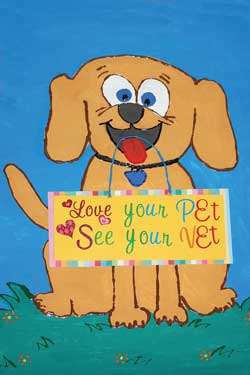
Take a look at the winning entries for 2013 for inspiration. This year’s theme is “Love Your Pet, See Your Vet.”

Trey Favaloro of Baton Rouge, La., was in third grade when he submitted his drawing that won the poster contest.


Jasmine Jimenez of New York City was in ninth grade when she submitted the winning poem:

A True Pet’s Friend


Whether you have a dog, cat, bird, or rodent
Don’t you dare waste another second.
If you love your pet
Take him or her to the vet.
They don’t have to be sick or need any repair
Just take them for a trip to show them you care.


If you want your pet to love you making sure they’re healthy is a must
When they sense that you’re helping them they start to develop a sense of trust.
Knowing they have a friend makes their heart’s beat ever so gentle
So make sure to get them checked for illness, diet and dental.
Sure buying toys can really make a pet content
But that happiness only last for a moment.


The best gift you can give them is a healthy life that lasts long
When visiting his doctor, nothing can go wrong.
Go ahead and make an appointment
With your pet’s health you can’t lose a moment.
Because when it comes time they need some love to be around
They know where a sincere, dear friend can be found.


See the AVMA Auxiliary’s website for more information about the poster contestand creative writing contest. Good luck!


Thursday, April 25, 2013

Wobbles-Veterinary Emergency Group Mascot


On Sunday night October 29th 2012, a good samaritan brought in a wet, cold, lost dog to VEG since we were the only animal hospital open during the storm. She was evaluated to be dehydrated and was showing neurological signs making us concerned about the possibility of head trauma. She was admitted to the hospital and treated appropriately figuring as soon as Hurricane Sandy had past, we would hear from the concerned parents of this lost dog.

Over the next few days, we slowly weaned her off treatment however she continued to have neurological signs. We had not heard from anyone about a lost dog but we figured since there was no power or gasoline in the area, it could be a few days for the owners to finally contact us.

As of today, Wobbles, as we affectionately call her, is still here and is now our very loveable hospital mascot! She is a happy and loving dog but still has neurological signs. Everyone who meets her falls in love with her. She comforts owners who have to leave their pets here for hospitalization. She has a way of bringing smiles to the saddest faces.

The staff has provided her with beds, toys, bowls, food, and treats! One of the associate veterinarians has spayed her. Clients love her and inquire about her all the time. We even had a neurologist evaluate her free of charge! However, his recommendation is an MRI and a cerebrospinal fluid (CSF) tap so that we can specifically determine the underlying cause of her neurologic problem and potentially improve her condition. We are planning on scheduling her MRI for this week and we are keeping our fingers crossed!


Wobbles should be getting her MRI this week! Thanks everyone!!!!

 Wobbles Facebook Page: https://www.facebook.com/pages/Wobbles/359104157540753
Wobbles Donation Page (We've raised $2000 so far!): http://www.indiegogo.com/projects/wobbles-needs-an-mri?c=home


Monday, February 4, 2013

February is Responsible Pet Owners Month

Did you know that February is Responsible Pet Owners Month? This is a great time to take a step above and beyond your usual excellent pet care. We recommend a healthier diet, or a new exercise regimen—anything that makes your pet a happier and healthier member of your family. What are you going to do to celebrate Responsible Pet Owners Month?